The Origin
THE STATUES WE REMEMBER
Before a fragrance becomes beautiful, it needs a body, a posture, and a memory. The first language of AMX AURA came from statues that seem silent until you stand with them long enough.
A statue does not move, but it can teach the body how to feel brave.
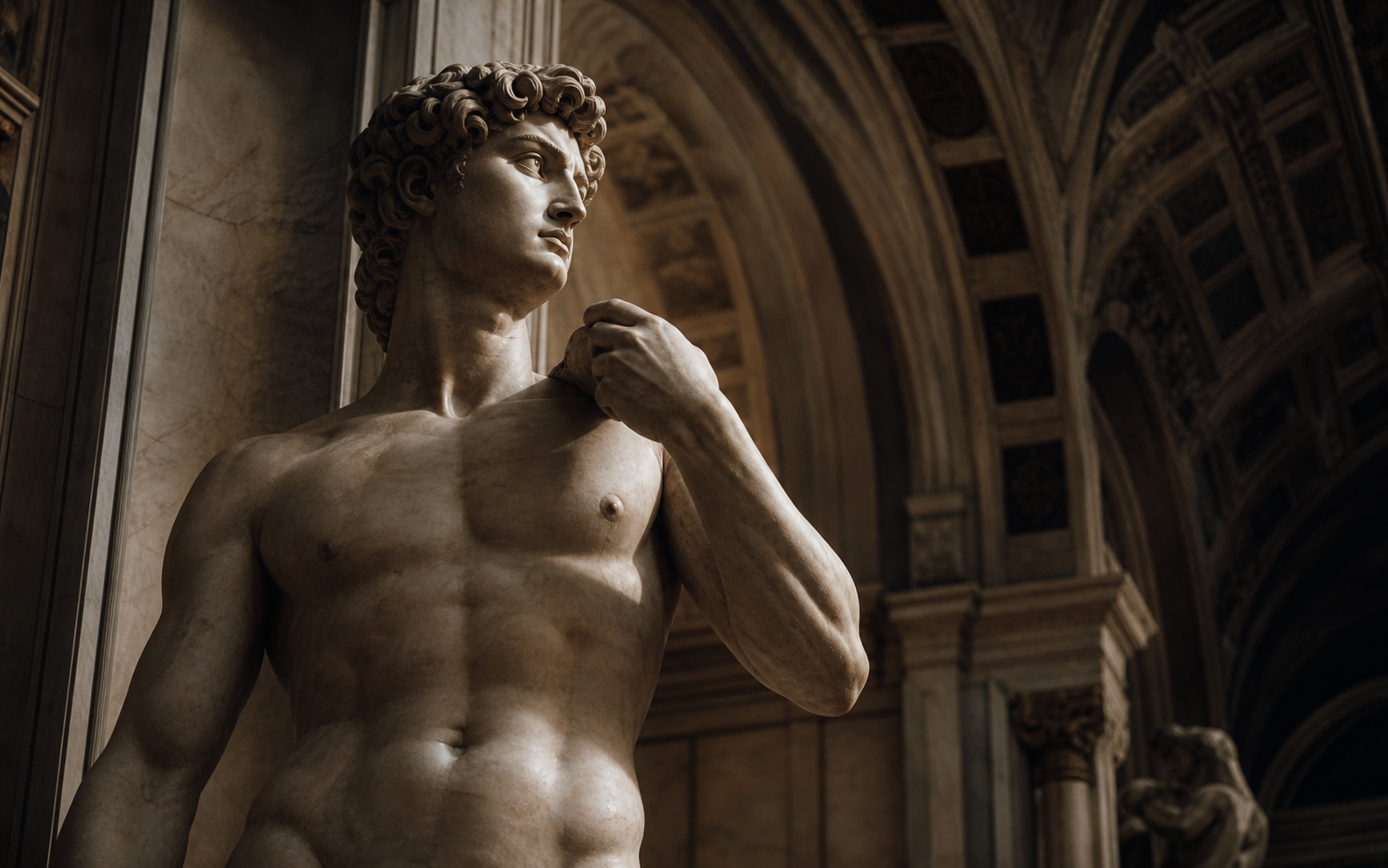
David: the second before courage
David is remembered as a hero, but the sculpture is powerful because it does not show the victory. It shows the breath before it. The body is alert, the eyes are fixed somewhere beyond the room, and the hand still carries the weight of a decision.
That is why David feels modern to me. Confidence is not always loud. Sometimes it is the quiet knowledge that fear is present, and you move anyway.
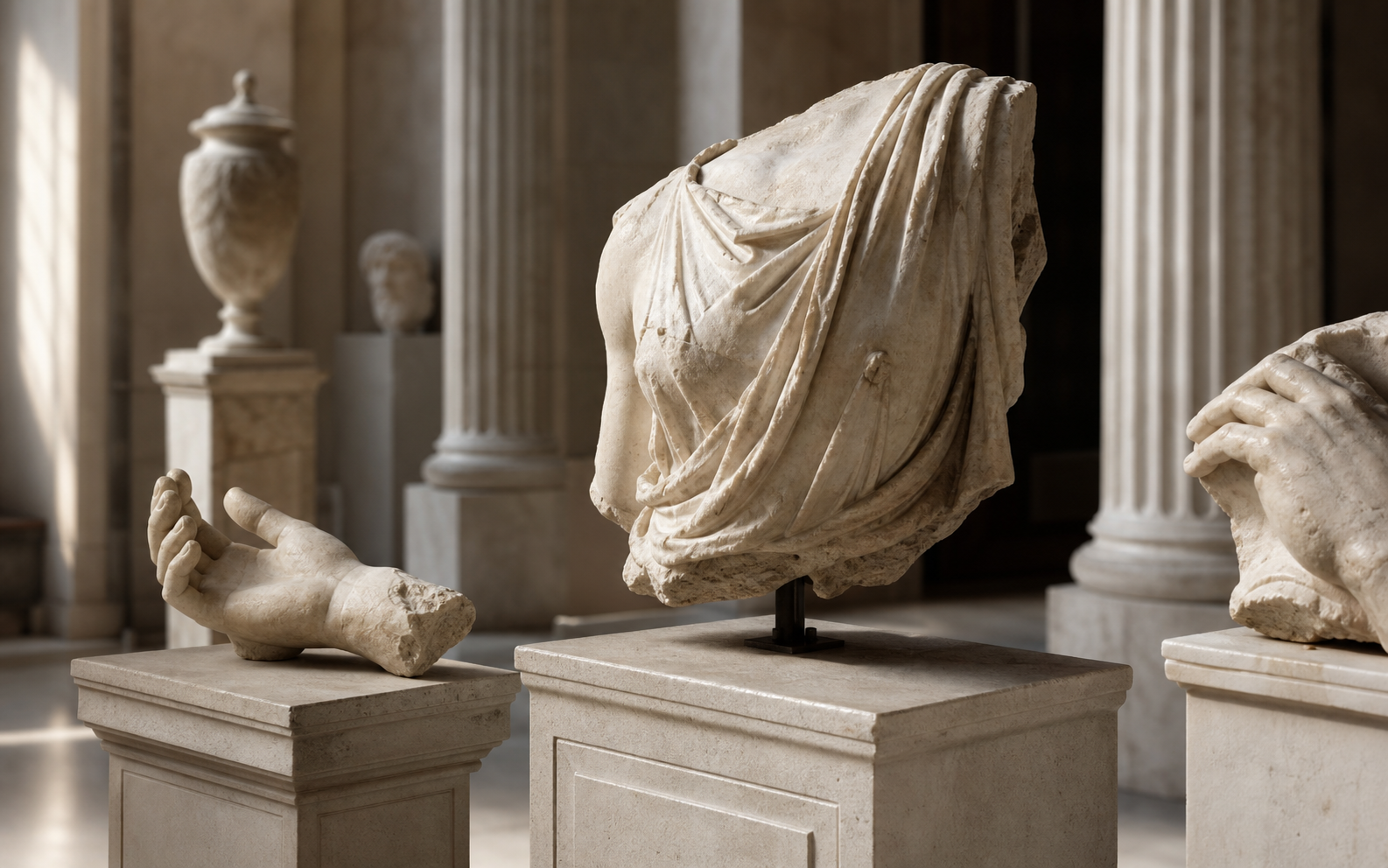
Venus: beauty after the missing parts
The Venus de Milo is famous for what remains, but also for what is absent. The missing arms do not make her incomplete; they make the viewer enter the work. You begin to imagine the gesture, the angle of the hands, the moment that has disappeared.
Her beauty is not perfection. It is balance, softness, distance, and mystery. She teaches that elegance can survive damage, and that what is withheld can be more powerful than what is shown.
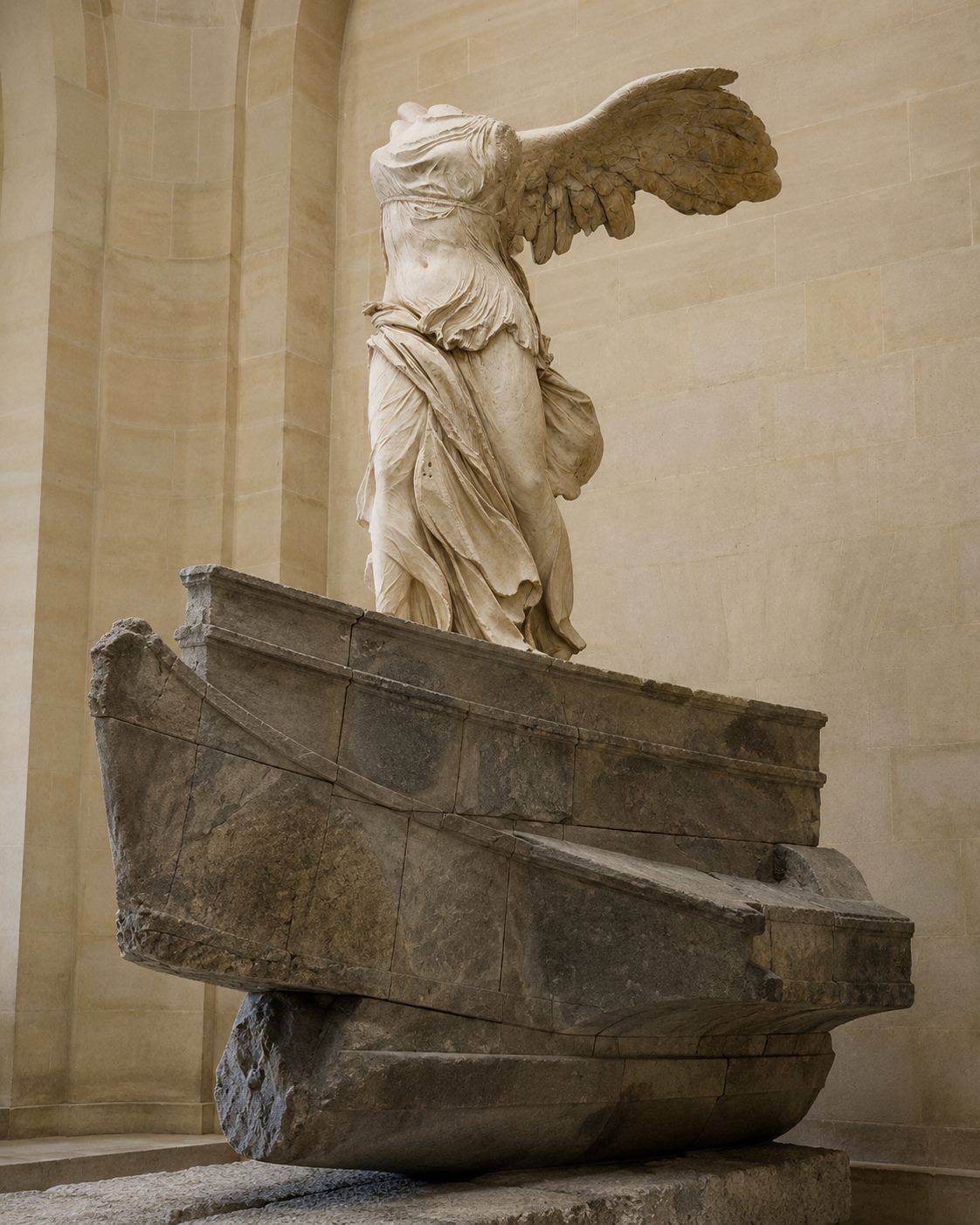
The winged figure: motion held in stone
The statue in our image belongs to that same family of impossible stillness. Wings, fabric, and lifted posture all suggest movement, but the body never leaves the pedestal. It is not a person running; it is the memory of arrival.
That contradiction became important to the brand: something invisible can still have architecture. A scent can stand in the air the way a sculpture stands in a hall.